How long can a water bottle or canteen go without being washed?
Water Bottle, Reusable Water Bottles - How long can a water bottle or reusable water bottle go without being washed?

Reusable water bottles have become essential accessories for staying hydrated throughout the day. Whether you use a stainless steel water bottle, an insulated water bottle, a Tritan water bottle, or a sports water bottle, a common question arises: how long can a water bottle go without being washed?
Many people believe that because they only put water in their bottle, cleaning is not necessary. However, even a water bottle used only for water can accumulate bacteria, microorganisms, saliva residue, and moisture, promoting the development of unpleasant odors.
In this comprehensive guide, we will discover why regular cleaning is essential, how long a water bottle can go without washing, what mistakes to avoid, and how to extend the life of your water bottle while preserving your health.
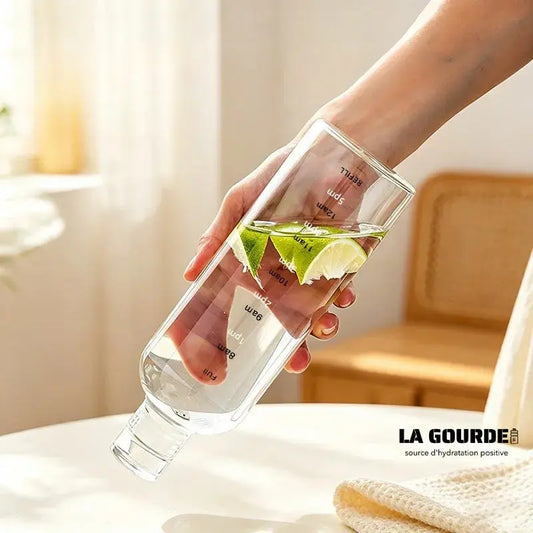
Glass Water Bottle – Why should you regularly wash a water bottle?
Even when your water bottle contains only water, it is not completely protected against contamination.
With each use:
- Your lips come into contact with the spout.
- Bacteria naturally present in the mouth can be transferred.
- Moisture promotes the development of microorganisms.
- Airborne particles can enter the bottle.
When these elements accumulate for several days, they can lead to:
- Unpleasant odors.
- An altered taste of the water.
- Bacterial proliferation.
- A decrease in overall hygiene.
Regular cleaning helps keep water more pleasant to drink while preserving the quality of your bottle.
Glass Water Bottle – How long can a water bottle go without being washed?
The answer mainly depends on its use.
For a water bottle used daily with water only, it is generally recommended to clean it every day or at least every two days.
Leaving a water bottle unwashed for an entire week is generally not advisable.
Several factors influence the rate of bacterial development:
- Ambient temperature.
- Frequency of use.
- Type of water bottle.
- Presence or absence of sugary drinks.
- Quality of drying.
A water bottle carried in a bag, exposed to heat, or used during sports will generally require even more frequent cleaning.
The goal is not only to avoid bacteria but also to preserve the comfort of use and the taste quality of the water.
Water Bottle – What happens when a water bottle is not cleaned?

A neglected water bottle can quickly become an environment conducive to the development of microorganisms.
The first signs often appear as:
- Unusual odors.
- A different taste of the water.
- Visible deposits.
- A less clean appearance of the cap.
Over time, bacteria can multiply in hard-to-reach areas:
- Caps.
- Seals.
- Integrated straws.
- Closure systems.
These wet areas represent the most sensitive spots.
Even if it does not systematically cause a health problem, poor maintenance increases the risk of insufficient hygiene quality.
Water Bottles – Do stainless steel water bottles require less maintenance?
Stainless steel water bottles enjoy an excellent reputation thanks to their resistance and durability.
Stainless steel offers several advantages:
- Corrosion resistance.
- Low odor retention.
- Easy cleaning.
- Great durability.
However, this does not mean that they can go long periods without being cleaned.
Even the best stainless steel water bottle must be washed regularly to eliminate:
- Saliva residue.
- Mineral deposits.
- Bacteria.
- Impurities.
Stainless steel facilitates maintenance but does not replace it.
Hygienic Water Bottle – Which water bottle is the easiest to clean?
The choice of model strongly influences the ease of maintenance.
Comparison table No. 1
| Type of water bottle | Ease of cleaning | Recommended maintenance |
|---|---|---|
| Stainless steel water bottle | Excellent | Daily |
| Tritan water bottle | Very good | Daily |
| Insulated water bottle | Good | Daily |
| Water bottle with straw | Average | Thorough daily cleaning |
| Sports water bottle with valve | Average | Very regular |
Water bottles with a wide opening are generally the easiest to clean properly.
A simple design also reduces areas where bacteria can accumulate.
Insulated Water Bottle – How often should a water bottle actually be washed?

When asking how long a water bottle can go without being washed, the best answer is simple: as regularly as possible. Hygiene specialists generally recommend daily cleaning for a water bottle used every day.
Even if it contains only water, several elements can promote the appearance of bacteria:
- Contact with lips.
- Permanent humidity.
- Temperature variations.
- Transport in a bag.
- Repeated handling.
The ideal frequency also depends on usage:
| Usage | Recommended frequency |
|---|---|
| Water only | Every day |
| Flavored water | After each use |
| Tea or coffee | After each use |
| Sugary drinks | Immediately after use |
| Sports water bottle | After each session |
People using their water bottle in hot environments or during intense physical activity should be particularly vigilant.
Frequent cleaning not only ensures good hygiene but also preserves the quality of the water and the lifespan of the water bottle.
Eco Water Bottle – The real risks of a poorly maintained water bottle
Many people underestimate the consequences of insufficient maintenance.
A poorly cleaned water bottle can become a favorable environment for the proliferation of microorganisms.
The most frequent consequences are:
Appearance of bad odors
This is usually the first visible sign.
An unpleasant odor often indicates an accumulation of bacteria or residue in the cap or seals.
Alteration of water taste
Water can develop an unusual taste that makes it less pleasant to drink.
Development of deposits
White marks, residues, or deposits may appear over time.
Decreased comfort of use
A poorly maintained water bottle quickly becomes less pleasant to use daily.
Fortunately, these problems are easy to avoid with a few simple maintenance steps.
Motivated Water Bottle – How to effectively clean a water bottle?

Effective cleaning usually only takes a few minutes.
Step 1: Disassemble removable parts
Remove:
- The cap.
- The seals.
- The straws.
- Removable accessories.
Step 2: Wash with hot water
Use:
- Hot water.
- A mild dish soap.
- A suitable brush.
Step 3: Focus on sensitive areas
The most important parts are:
- The spout.
- The seals.
- The valves.
- The straws.
Step 4: Rinse thoroughly
No soap residue should remain in the water bottle.
Step 5: Allow to dry completely
Drying is as important as the cleaning itself.
A water bottle closed while still wet promotes the appearance of odors.
La Gourde – How to eliminate bad odors in a water bottle?
Even with regular maintenance, some water bottles can sometimes develop persistent odors.
Several simple solutions can help restore a clean water bottle.
Baking soda
Baking soda is particularly effective at neutralizing odors.
Instructions:
- One tablespoon.
- Hot water.
- Let it act for several hours.
White vinegar
Vinegar helps remove deposits and some stubborn odors.
Lemon
Lemon provides a natural and pleasant solution to refresh the inside of the water bottle.
These methods are particularly useful for stainless steel water bottles, insulated water bottles, and Tritan water bottles.
Mistakes to avoid with a reusable water bottle
Certain habits can significantly reduce the hygiene and lifespan of your water bottle.
Never clean it
This is the most common mistake.
Wait for odors to appear
When odors appear, bacteria have already been present for some time.
Forgetting the seals
Seals are often the most exposed to moisture.
Leaving stagnant water for several days
Water left in a water bottle for several days generally deteriorates in quality.
Closing a wet water bottle
This mistake strongly promotes the development of bad odors.
Avoiding these bad habits significantly improves the product's durability.
Comparison table No. 2: Which drinks require the most maintenance?

| Drink | Maintenance level |
|---|---|
| Still water | Low |
| Sparkling water | Moderate |
| Flavored water | High |
| Tea | High |
| Coffee | High |
| Fruit juices | Very high |
| Smoothies | Very high |
| Protein drinks | Very high |
The more sugar, flavorings, or protein a drink contains, the faster and more thorough the cleaning should be.
This simple rule significantly limits the risks of odors and contamination.
Why a clean water bottle improves your hydration experience?
A clean water bottle is not just a matter of hygiene.
It also improves:
- The taste of water.
- Comfort of use.
- Motivation to drink more.
- Product durability.
- Daily experience.
People using a water bottle to drink more water naturally often find that a clean container encourages more regular water consumption.
Conversely, a water bottle with odors or an unpleasant taste is likely to be neglected.
Maintenance therefore directly contributes to the success of your hydration goals.
Conclusion: How long can a water bottle or reusable water bottle go without being washed?

So, how long can a water bottle go without being washed? Technically, several days are possible, but it is not recommended. To preserve your health, comfort, and water quality, it is best to clean your water bottle daily or at least every two days when it contains only water.
Stainless steel water bottles, insulated water bottles, and modern reusable water bottles are designed to facilitate maintenance, but no material eliminates the need for regular cleaning. A few minutes are enough to avoid bad odors, extend the product's lifespan, and fully enjoy the benefits of good hydration.
Discover our selection of quality water bottles and choose a practical, durable, and easy-to-maintain model to accompany you every day towards healthier and more pleasant hydration.
FAQ How long can a water bottle or reusable water bottle go without being washed? – Maintenance, Hygiene, and Cleaning of Water Bottles

1. Should you wash your water bottle every day?
Yes, it is recommended to wash your water bottle every day, even if it only contains water. Contact with the lips, humidity, and naturally occurring bacteria in the mouth can promote microbial proliferation. Daily cleaning helps maintain hygiene, water quality, and the durability of your reusable water bottle.
2. How long can water be kept in a water bottle?
Water can generally stay in a clean reusable water bottle for 24 to 48 hours. Beyond that, it is advisable to change the water to maintain optimal quality. Heat, sun exposure, and repeated openings can accelerate the appearance of unpleasant tastes and promote the development of microorganisms.
3. How to clean a stainless steel water bottle effectively?
To clean a stainless steel water bottle, use warm water, mild dish soap, and a suitable brush. Pay particular attention to the cap and seals. Thorough cleaning removes residue, bacteria, and odors. Regular maintenance preserves the qualities of stainless steel and extends the life of the water bottle.
4. Can bacteria grow in a reusable water bottle?
Yes, bacteria in a reusable water bottle can appear when it is not cleaned regularly. Humidity, saliva, and residues present in the caps create a favorable environment for their development. Frequent washing and complete drying significantly reduce this risk.
5. Should a water bottle containing only water be cleaned?
Even if your water bottle contains only water, regular cleaning remains essential. With each use, bacteria can be transferred from the mouth to the spout. Cleaning your water bottle daily helps maintain good hygiene and prevent unpleasant odors.
6. What is the best method to remove odors from a water bottle?
Baking soda is one of the most effective solutions for eliminating odors from a reusable water bottle. Mixed with hot water and left to act for several hours, it helps neutralize bad odors. White vinegar is also an excellent natural alternative for deep cleaning.
7. Why does my water bottle smell bad despite cleaning?
A persistent odor often comes from the seals, caps, or hard-to-reach areas. Even a stainless steel water bottle can develop odors if certain parts are not properly cleaned. Disassembling removable elements and letting them dry completely significantly improves the overall hygiene of the water bottle.
8. Can a water bottle be put in the dishwasher?
Some reusable water bottles are dishwasher-safe, but this depends on the material and the manufacturer's recommendations. Stainless steel or insulated water bottles often require manual washing to preserve their performance. Always check the care instructions before use.
9. Which water bottle is the easiest to clean?
Wide-mouth stainless steel water bottles are generally the easiest to maintain. Their simple design facilitates access to the interior and limits the accumulation of bacteria in hard-to-reach areas. They are an excellent choice for people looking for a practical and hygienic water bottle.
10. Do water bottles with straws require more maintenance?
Yes, water bottles equipped with a straw require more frequent maintenance. Straws, valves, and mouthpieces can retain more moisture and residue. Thorough cleaning after each use helps limit bacterial proliferation and maintain excellent hydration quality.
11. How to tell if a water bottle is poorly maintained?
A poorly maintained water bottle often shows visible or perceptible signs: bad odors, unusual taste, deposits in the cap, or traces inside. These indicators show that a thorough cleaning is necessary to restore optimal hygiene and a pleasant user experience.
12. Should an insulated water bottle be washed more often?
An insulated water bottle should be cleaned with the same frequency as a classic water bottle. However, when it contains coffee, tea, or flavored drinks, washing after each use is highly recommended to avoid persistent odors and difficult-to-remove residues.
13. What are the risks of drinking from a dirty water bottle?
Regularly drinking from a poorly maintained reusable water bottle can promote exposure to unwanted bacteria and microorganisms. Although the risks often remain limited, maintaining good hygiene ensures better water quality and a more pleasant hydration experience.
14. Can water be left in a water bottle for several days?
It is best to avoid letting water stagnate for several days in a water bottle. To keep water fresh and pleasant to drink, it is recommended to renew its content daily and regularly clean the container to avoid any alteration of the taste.
15. What is the ideal frequency for cleaning a reusable water bottle?
The ideal frequency is daily cleaning for regular use. This habit helps limit the presence of bacteria in a reusable water bottle, prevent bad odors, and ensure healthy hydration. A few minutes of maintenance are enough to preserve your water bottle for a long time.