Water Bottle - Minimum Daily Water Intake
Water Bottle, Water Bottles, Water for Drinking All Day, Water Bottle for Drinking More, Water Bottles - Minimum Daily Water Intake

Hydration plays a vital role in the proper functioning of the body. The topic of Water Bottle is now at the heart of concerns related to well-being, health, physical performance, and quality of life. Drinking enough water every day helps maintain good blood circulation, a stable body temperature, efficient digestion, and improved concentration.
Yet, many people still don't know what the minimum amount of water to drink daily is. Between official recommendations, individual needs, and consumption habits, it can be difficult to find one's bearings. Understanding real water needs helps prevent dehydration, fatigue, headaches, and a decrease in physical or intellectual performance.
Good hydration also promotes the elimination of toxins, the maintenance of healthy skin, and the proper functioning of vital organs.
In this comprehensive article dedicated to Water Bottle, you will discover how much water to drink each day, what factors influence your hydration needs, the benefits of optimal hydration, and the best strategies to integrate regular water consumption into your daily life.
Whether you are an athlete, active, a student, or a senior, adopting good hydration practices is a long-term investment for your health and well-being.
Water Bottle and Official Water Consumption Recommendations
International health organizations agree on the importance of adequate daily hydration. General recommendations often state that an adult should consume between 1.5 and 2.5 liters of water per day, depending on their lifestyle. However, this amount varies depending on several factors such as age, sex, weight, physical activity, and climatic conditions. The Water Bottle concept helps us better understand that hydration needs are not the same for everyone.
Water makes up approximately 60% of an adult's body weight. Every day, the body loses water through respiration, perspiration, urine, and stool. These losses must be compensated to maintain optimal fluid balance. Insufficient hydration can lead to a drop in energy, difficulty concentrating, and decreased physical performance.
Health professionals also recommend listening to the body's natural signals. The feeling of thirst is a useful indicator, but it sometimes appears when dehydration is already established. It is therefore preferable to consume water regularly throughout the day. A reusable water bottle or a glass of water within reach greatly facilitates this habit.
The main goal is not just to drink more but to drink intelligently. A regular hydration strategy helps support metabolism, physical recovery, and the overall proper functioning of the body.
Water Bottle - Why Water is Essential for the Human Body
Water is involved in almost all biological functions. It ensures the transport of nutrients, the elimination of metabolic waste, the lubrication of joints, and the regulation of body temperature. In a Water Bottle approach, understanding the fundamental role of water helps us better appreciate its daily importance.
Without sufficient water intake, the body has to work harder to maintain its essential functions. The kidneys, in particular, need an adequate volume of water to efficiently filter waste and eliminate it through urine. Proper hydration also helps maintain balanced blood pressure.
Water also plays a major role in cognitive abilities. Several studies show that slight dehydration can affect memory, alertness, and concentration. Students, professionals, and all people with sustained intellectual activity therefore benefit from regular hydration.
Digestive health also depends on sufficient water intake. Water facilitates intestinal transit and helps prevent certain digestive discomforts. It also helps maintain skin elasticity and promotes a more radiant complexion.
Finally, water is an ideal alternative to sugary drinks. By prioritizing adequate water consumption, it becomes easier to reduce unnecessary caloric intake while taking care of overall health.
Water Bottle for Drinking: Minimum Daily Water Intake According to Your Profile

Water needs vary considerably from person to person. In the Water Bottle approach, it is essential to take individual characteristics into account to determine the ideal amount to consume each day.
| Profile | Recommended Quantity |
|---|---|
| Adult Woman | 1.5 to 2 liters |
| Adult Man | 2 to 2.5 liters |
| Elderly Person | 1.5 to 2 liters |
| Pregnant Woman | 2 to 2.5 liters |
| Breastfeeding Woman | 2.5 to 3 liters |
| Athlete | 2.5 to 4 liters depending on effort |
These values are general guidelines. Intense physical activity greatly increases fluid loss through perspiration. People living in hot regions or exposed to high temperatures must also increase their consumption.
Body weight also influences water needs. A commonly used method is to consume between 30 and 35 ml of water per kilogram of body weight. Thus, a person weighing 70 kg could aim for approximately 2.1 to 2.45 liters per day.
Adjusting consumption according to one's profile allows for more effective hydration that is better adapted to the body's real needs.
Hydration Bottle: Signs Indicating Lack of Hydration
Recognizing the first symptoms of dehydration is essential in a Water Bottle approach. Signs sometimes appear gradually and can be easily overlooked.
The feeling of thirst is the first indicator. However, other manifestations may appear even before thirst becomes significant. The most common signs include fatigue, headaches, dry mouth, slight dizziness, and decreased concentration.
Dark urine is also a classic sign of lack of hydration. A light yellow color generally indicates a good level of hydration, while a darker shade may reveal a fluid deficit.
For athletes, dehydration often leads to a decrease in performance, slower recovery, and an increased risk of muscle cramps. In the elderly, it can promote certain balance or alertness disorders.
Rapidly identifying these signals makes it possible to act before the consequences become more significant. Regular water consumption throughout the day remains the best prevention strategy.
Water Bottle and Physical Activity
Physical activity significantly changes hydration needs. During exertion, the body's internal temperature increases and it produces sweat to maintain thermal balance. This water loss must be effectively compensated.
Within the context of Water Bottle, athletes must anticipate their hydration before, during, and after exercise. A good strategy is to drink small amounts regularly rather than a large volume all at once.
| Moment | Recommendation |
|---|---|
| Before exertion | 400 to 600 ml |
| During exertion | 150 to 250 ml every 20 minutes |
| After exertion | Compensation for losses |
Endurance sports require particular vigilance. The longer the activity, the greater the fluid loss. In some cases, drinks containing electrolytes can effectively supplement hydration.
Adequate hydration promotes performance, limits fatigue, and improves muscle recovery.
Water Bottle: The Best Sources of Hydration

When talking about a Water Bottle, water naturally remains the main reference. However, certain foods also contribute to daily fluid intake.
Water-rich fruits like watermelon, melon, orange, or strawberry are excellent complements. Vegetables such as cucumber, tomato, or lettuce also contain a high proportion of water.
Herbal teas, infusions, and unsweetened flavored waters can contribute to daily hydration. On the other hand, very sugary or highly alcoholic drinks should not be considered optimal hydration solutions.
A balanced diet combined with regular water consumption makes it easier to achieve recommended hydration goals.
Water Bottles: Common Mistakes Related to Water Consumption
Despite the importance of hydration, some mistakes remain very common. In a Water Bottle strategy, it is useful to identify these bad habits to correct them.
The first mistake is to wait until you are thirsty to drink. As mentioned earlier, the feeling of thirst often appears after dehydration has begun.
The second mistake concerns excessive water consumption in a very short time. Effective hydration relies on regular distribution throughout the day.
Finally, many people underestimate the hydration needs related to hot periods, travel, sports, or certain working conditions. Adapting consumption to these situations helps avoid many inconveniences.
Graduated Water Bottle: The Benefits of Good Hydration
Benefit 1: More Energy Daily
Optimal hydration supports physiological functions and helps maintain stable energy levels. Properly hydrated individuals generally experience less fatigue and improved concentration.
Benefit 2: Improved Physical Performance
In the Water Bottle world, hydration is a major lever for performance. Sufficient consumption improves endurance, reduces the risk of cramps, and facilitates recovery.
Benefit 3: Well-being and Lasting Health
Regular hydration contributes to the proper functioning of organs, skin quality, digestive comfort, and the maintenance of good overall health in the long term.
Smart Water Bottle: How to Easily Incorporate More Water into Your Routine
Creating simple habits can permanently improve your water consumption. Keeping a water bottle nearby is one of the most effective methods. This makes it easier to drink regularly without having to think about it.
Setting reminders on your smartphone or associating water consumption with certain daily habits is also an excellent strategy. Drinking a glass of water upon waking, before each meal, or after a break helps establish a lasting routine.
Naturally flavored waters with lemon, mint, or fruits can make hydration more pleasant for people who find it difficult to drink plain water.
Conclusion: Water Bottle – Minimum Daily Water Intake

The Water Bottle concept reminds us of the importance of adequate hydration for maintaining health, performance, and general well-being. Although needs vary for each individual, aiming for between 1.5 and 2.5 liters of water per day is a relevant baseline for most adults.
Factors such as physical activity, outdoor temperature, age, and health status should always be considered. Adopting regular water consumption, recognizing the signs of dehydration, and incorporating simple daily habits can sustainably optimize your hydration.
Better management of daily water intake represents a direct investment in your energy, comfort, and quality of life.
FAQ – Water Bottle: Minimum Daily Water Intake
1. What is the minimum daily water intake with a water bottle?
The recommended minimum daily water intake for an adult is generally between 1.5 and 2 liters of water. Using a water bottle makes it easy to track daily consumption and meet hydration goals. Needs can vary based on weight, age, physical activity, and climate conditions.
2. Why use a water bottle to reach your daily water consumption?
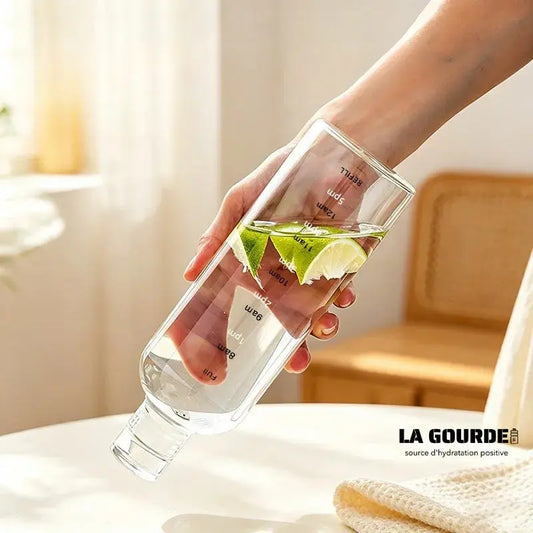
A water bottle facilitates tracking hydration throughout the day. Thanks to its measurable capacity, it allows you to quickly visualize the amount of water already consumed and how much more you need to drink. It's a practical solution for meeting the minimum daily water intake recommended by health professionals.
3. How many times should you refill your water bottle each day?
The number of refills depends on the capacity of your bottle. For example, with a 750 ml water bottle, you will generally need to refill it two to three times a day to achieve optimal hydration. This method simplifies tracking the minimum daily water intake.
4. Does a water bottle really help you drink more water?
Yes, a water bottle is an excellent tool for developing better hydration habits. Having water readily available encourages more regular consumption throughout the day. This reduces the risk of dehydration and facilitates reaching the recommended water intake.
5. What capacity water bottle should I choose for optimal hydration?
For most adults, a water bottle of 750 ml to 1 liter offers an excellent compromise between practicality and autonomy. Athletes or very active individuals can opt for larger capacity models to more easily meet their daily water needs.
6. What are the signs that you are not drinking enough water?
The main symptoms of a lack of hydration include fatigue, headaches, dry mouth, difficulty concentrating, and dark urine. Using a water bottle allows for better control of consumption and helps avoid these signs related to insufficient hydration.
7. Does the minimum daily water intake change based on physical activity?
Yes, hydration needs increase during physical activity. The more intense the effort, the greater the water loss through perspiration. A water bottle then becomes essential to maintain regular hydration before, during, and after exercise.
8. What are the advantages of a reusable water bottle?
A reusable water bottle offers several advantages: it promotes better hydration, reduces the use of disposable plastic bottles, and allows for long-term savings. It also provides an ecological and practical solution to meet the minimum amount of water to drink each day.
9. How to easily reach the minimum amount of water to drink per day?
To reach your hydration goals, always keep your water bottle close by, drink small amounts regularly, and set yourself milestones throughout the day. This simple method improves your daily water intake and contributes to your health, energy, and overall well-being.